


By George Mutua
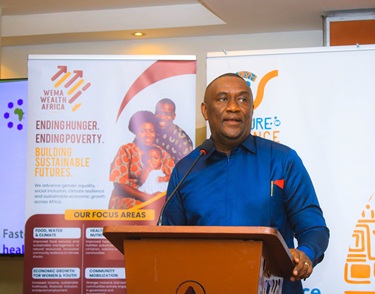
“If you are a scientist and you don’t find yourself in this gap, science will still be just science. It will wait,” said Hon. Stephen Mutinda Mule.
Nairobi, Kenya — September 8, 2026
Africa’s scientific future cannot afford to wait for politicians to notice it, but neither can it succeed without them. This was the dual message delivered this morning as the first-ever Culture of Science Conference opened in Nairobi, with Kenyan leaders issuing an urgent call for researchers and innovators to engage directly with Parliament and the Treasury or watch their work remain confined to laboratories.
Hon. Stephen Mutinda Mule, MP for Matungulu Constituency and Chair of the TB Parliamentary Caucus, delivered a blunt warning to the more than 40 member organizations represented in Nairobi. “If you are a scientist and you don’t find yourself in this gap, when legislation, policy and the budgeting process is being done, science will still be just science. It will wait,” Mule declared. “Because it requires this particular intervention to make sure the science which helps our people is implemented.”
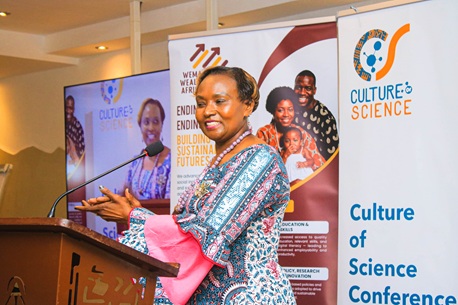
His remarks were preceded by an opening address from Mary Muia-Mukhwana, President, SIAF 2025/2026; Vice Chair, NGO Committee on Sustainable Development-NY (NGOCSD-NY); Founder and Director, WEMA WEALTH AFRICA; and Chair of the Coalition for Health Research and Development (CHReaD) Steering Committee. She declared that the three-day gathering marks a turning point in how Africa engages with science, not as a distant discipline, but as the fabric of society itself. “Science is not a distant discipline. It is not reserved just to people that are in the laboratory or the academic journals,” Muia-Mukhwana told delegates from across Kenya and the continent. “Without science, how our societies are governed, how our economies grow, how our communities thrive, these three cannot be put together.”
Both leaders acknowledged that the gathering was long overdue. “This is the opening ceremony of the first-ever conference of culture of science in Africa,” Muia-Mukhwana said. “The Culture of Science agenda has taken so long to be part of our agenda.” Mule echoed the sentiment: “It’s a conference which is completely overdue. We should have had these conferences a while back. The simple reason is that whatever we do in the labs and in society purely depends on science.”
The conference theme, “Shaping Africa’s Future through Science,” reflects a collective conviction that the continent must embrace science as a cultural, political and economic force. Muia-Mukhwana emphasized that CHReaD now brings together more than 40 member organizations from different sectors across the continent, all united by a commitment to evidence and African expertise.
Mule delivered a blunt assessment of the current state of science in Africa, declaring that “research and development on this continent remains structural and unfunded.” He stressed that without resources, scientific progress would stall, not because returns are absent, but because science has been treated as a technical matter rather than a political and economic priority that Parliament and Treasury must own. “That has changed and it has to change starting within this conference,” he declared.
Drawing on his experience leading the TB Parliamentary Caucus, Mule offered a powerful example of what sustained political engagement can achieve. “Back in 2013, this country had a zero budget for TB. Zero. Not one, zero,” he recounted. “And we sat down as members of parliament and made sure that TB had priority on budgeting.” Today, he said, the TB caucus is one of the best-funded programs in the country and the region working to safeguard humanity.
“TB caucus has shown what sustainable political engagement can do when parliamentarians treat a health and research priority as a standing commitment rather than an annual debate,” Mule said. “Financing follows. Domestic resource mobilization follows. Accountability follows. That is not unique to TB. It is a model this coalition can extend to the wide science innovation agenda this conference is viewing towards.”
In a surprising revelation, Mule told delegates that Kenya already has a science fund, but it has remained largely unused since its establishment. “There is a science fund in this country. But it has been silent since 1972,” he said, challenging delegates to leverage existing laws rather than demand new legislation. “Don’t send me to parliament to make any new law. The law is there. It’s you to dig that law out and know what it says. And look at the best way we can leverage on it.”
He issued a direct challenge to researchers and scientists in the room: engage with Parliament’s committee structures, and do it now. “Most of the African parliaments are working. The structure is more of the same. More work if you want to achieve your goal. You work with committees of parliament,” Mule said, naming the committees on health, research and technology, education, and budget as key targets.
He offered a clear timeline for action, cautioning that the budget cycle for the next financial year begins in October. “Don’t expect much on this financial year. You are already late. To be honest. Because the cycle of budgets starts in October,” he said. “You are well-timed now to have this meeting. By the time the government brings in what we call the budget policy paper, whatever you need to achieve, it is that budget policy paper. If you want to do anything within the budget cycle of this country, don’t wait when we will be setting out to reject the budget. It will be too late. Budget starts in October.”
Mule warned that the Culture of Science Action Agenda 2026–2028, which will be negotiated and signed at the close of the conference, must be designed for legislative action. “An action agenda that only speaks to research and institutions will circle out what we need to achieve,” he said. “An action agenda that names a parliament, a specific cost, timeline on act, on budget line, regulatory reform, on procurement, is an action agenda we can actually move. There is no option.”
He urged delegates to identify the political champions needed to drive each recommendation forward. “Name the political position each recommendation depends on. Name who needs to make it. Give us something we can carry back to the committee rules of parliament.” Reinforcing the conference theme, Mule insisted that the continent must shape its own future. “Shaping Africa’s future through science, not borrowing, not waiting for it. Shaping it is in our own terms. The terms are within ourselves. And that’s why I’m always insisting: African problems require African solutions.”
He emphasized that political will is not a soft input but a precondition, noting that every regulatory path, every procurement guarantee, and every condition to scale runs through legislation and Treasury before it runs through a laboratory.
Over three days, delegates will engage in sessions across four pillars that form the backbone of a scientific society: financing scientific ambition through domestic resources, investment and philanthropic partnerships; enabling through policy and regulation to ensure rules facilitate rather than hinder innovation; catalyzing research and innovation by celebrating milestones across sectors including artificial intelligence and local manufacturing; and building public trust and legitimacy by confronting misinformation through evidence and science literacy.
Muia-Mukhwana identified building public trust as one of the most delicate challenges the conference will address. “Without a backup of evidence of science, we will be always confronted with misinformation,” she warned. “We really want to confront misinformation through evidence and science and making that as our culture in our undertaking.”
During the signing of the Culture of Science Action Agenda 2026–2028, delegates will set out a continental commitment framework addressing the stark reality that Africa bears 24 percent of the global disease burden but receives less than one percent of global health research and development investment.